


NEET preparation with PUC works best when it starts in 1st PUC. Study each Physics, Chemistry and Biology chapter for the PUC exam, then practise NEET-style MCQs on the same chapter within days. Revise weekly, take chapter tests in 1st PUC, add full-length mock tests in 2nd PUC, and follow the latest NMC syllabus.
NEET (UG) 2026 set 180 compulsory questions worth 720 marks, and Biology alone carried 90 of them. A student who treats every 1st PUC chapter as classroom work first and exam material second has already done half the preparation. The rest is practice and revision. Here is how to run NEET preparation with PUC from the first term: what overlaps, how each year differs, a sample timetable and a mock-test routine.
Physics, Chemistry and Biology are the PCMB core and the whole of NEET. The NEET (UG) 2026 information bulletin from the National Testing Agency sets out the paper's shape.
| Subject | Questions | Marks |
|---|---|---|
| Physics | 45 | 180 |
| Chemistry | 45 | 180 |
| Biology (Botany and Zoology) | 90 | 360 |
| Total | 180, all compulsory | 720 |
Three facts follow. Biology is half the marks, so it earns half the study time. Three hours for 180 questions averages one minute each, which makes speed a trained skill. A wrong answer costs one mark against four for a right one, so blind guessing is a habit to unlearn. The bulletin also lists Kannada among 13 languages the paper can be written in.
NEET and PUC exam preparation share chapters but reward different skills: a board answer earns marks for written explanation, NEET for the right choice among four options, quickly. Study for understanding first, then convert each chapter into MCQs. For what is examined, rely on the syllabus the National Medical Commission notified for NEET 2026, not a coaching handout, and check the NTA's NEET site each year. Eligibility needs Physics, Chemistry, Biology or Biotechnology and English at Class 12, which the Science (PCMB) course covers.
NEET preparation in 1st PUC should feel like better studying, not a second course. A student who understands Class 11 chapters properly spends 2nd PUC revising instead of learning from scratch.
The goal this year is not speed. It is being able to explain each completed chapter without the book and answer simple MCQs on it.
NEET preparation in 2nd PUC is mostly sequencing: finish the syllabus, keep Class 11 alive, and fit in board exams and practicals that arrive shortly before NEET, which was scheduled for 3 May in 2026.
| 1st PUC | 2nd PUC | |
|---|---|---|
| Main goal | Understand Class 11 chapters and build habits | Finish Class 12 while keeping Class 11 revised |
| Practice | Topic-wise MCQs after each chapter | Chapter tests first, then full-length mocks |
| Revision | Weekly, starting the day a lesson is taught | A written calendar for weak and forgotten topics |
| Main risk | Backlogs and too many books | Boards, practicals and mocks colliding |
Practicals help. The NMC syllabus lists experimental content (Physics Unit 20 covers 18 practical activities; Chemistry Unit 20 covers practical chemistry), so lab work for the PUC practical exam doubles as NEET revision. Around board exams, give most hours to board answers and keep a short daily MCQ set so the NEET skill does not fade.
The NMC syllabus runs to 20 units, from Physics and Measurement to Experimental Skills. Learn the concept, then the formula, then the unit and where it applies. Practise numericals in timed sets, and keep a formula notebook with one line per mistake.
The syllabus splits Chemistry into Physical (units 1 to 8), Inorganic (9 to 12), Organic (13 to 19) and Practical (20). Physical is concepts plus numericals. Organic is a skill: write reactions and mechanisms by hand until the pattern is automatic. Inorganic rewards line-by-line reading of the prescribed syllabus and relevant NCERT material, then repeated recall.
Biology is 90 of the 180 questions, so it cannot be a late revision subject. Read NCERT Biology closely, including diagrams, tables and terminology; the syllabus has ten units, from Diversity in Living World to Ecology and Environment. Use flashcards for terms, redraw diagrams from memory and read the explanation for every wrong MCQ option.
A NEET study timetable works only if it fits the real college day, so treat this as a sample. Fix meals, breaks, sleep and recreation first, then place study blocks around them.
| Block | College day | Weekend or holiday |
|---|---|---|
| Morning | 30 minutes: revise yesterday's Biology or Chemistry notes | 2 hours: one new concept chapter |
| Afternoon | 45 minutes: revise today's lessons; 60 to 90 minutes: PUC homework and records | 2 hours: topic-wise MCQs on the week's chapters |
| Evening | 60 minutes: MCQs on one chapter, then check every wrong answer | 3 hours: a chapter test or, in 2nd PUC, a full-length mock, reviewed the next day |
| Night | 20 minutes: update the formula notebook and error log | 1 hour: weekly revision and next week's targets |
Adapt it: a long commute moves the morning block to the night, and a practical day swaps MCQs for record work. The sample adds up to roughly four hours outside college on a college day, homework included, and about eight on a weekend day. Colleges that build NEET practice into the PU timetable already cover part of this inside college hours.
Move in stages: chapter-wise tests right after a chapter, cumulative tests that mix chapters, then full-length papers of 180 questions in three hours. The 2026 paper was pen and paper, so practise marking answers on a sheet. Check that a previous-year paper matches the pattern year before comparing scores, because earlier papers followed different structures.
A test without review rehearses the same mistakes. Label every lost mark:
One poor paper means little; five in a row point to a topic.
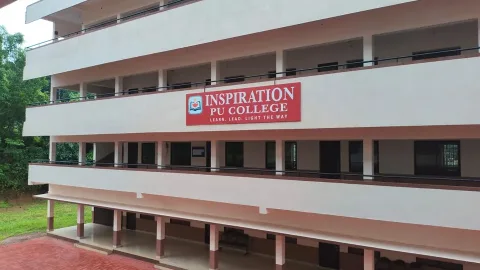
Inspiration PU College in Puttur says on its NEET coaching page that the coaching is built into the daily academic schedule, with the same faculty and timetable as regular PU classes, and lists chapter-wise, cumulative and full-length mock tests, daily doubt-clearing slots and score analysis with improvement plans. It says Science (PCMB) students receive it at no additional cost. Read it with the Science (PCMB) course page and ask the questions above in person. Students still choosing a stream can start with the guide to choosing a PU stream after Class 10 and the PCMB vs PCMC guide; families comparing institutions can read the PU college comparison for the Mangalore region and the PU education guide for Dakshina Kannada.
Yes, and starting in 1st PUC is easier than waiting. Study each Physics, Chemistry and Biology chapter for the PUC exam, then solve topic-wise MCQs on it within days. Keep revision weekly and avoid backlogs. The aim in the first year is understanding, not speed.
There is no official number, and consistency matters more than hours. The sample timetable above adds up to roughly four hours outside college on a college day and about eight on a weekend day, homework included. Adjust it to your college schedule, and protect meals, breaks and sleep.
Start chapter-wise tests in 1st PUC, right after each chapter is learned. Add cumulative tests as the syllabus grows, and move to full-length papers of 180 questions in three hours in 2nd PUC once most chapters are covered. Review every test before taking the next.
Not always. What matters is a clear plan, regular tests and a way to clear doubts. A separate centre adds travel and hours; a college that builds NEET practice into the PU timetable removes both. Ask either option how tests are analysed and how doubts are handled.
The National Testing Agency publishes each year's information bulletin on its NEET (UG) website, neet.nta.nic.in, and the National Medical Commission notifies the syllabus. Check both every year, because dates and pattern can change. The 2026 bulletin listed 180 compulsory questions for 720 marks.
NEET preparation with PUC is a long game: understand each chapter, practise it as MCQs, revise it weekly, then test it under exam conditions.
Explore Science (PCMB) and integrated NEET coaching at Inspiration PU College, Puttur. Apply for admission or call 8105914003.

M.Sc. Chemistry | B.Ed. | 10+ Years
Chief Administrative Officer, HOD Chemistry, NEET/JEE/KCET Trainer at Inspiration PU College.
Read full bio →Science (PCMB/PCMC) & Commerce (EBAC / CA Foundation / CS) with integrated NEET/JEE/KCET coaching.
Apply Now
0 Comments
Leave a comment